
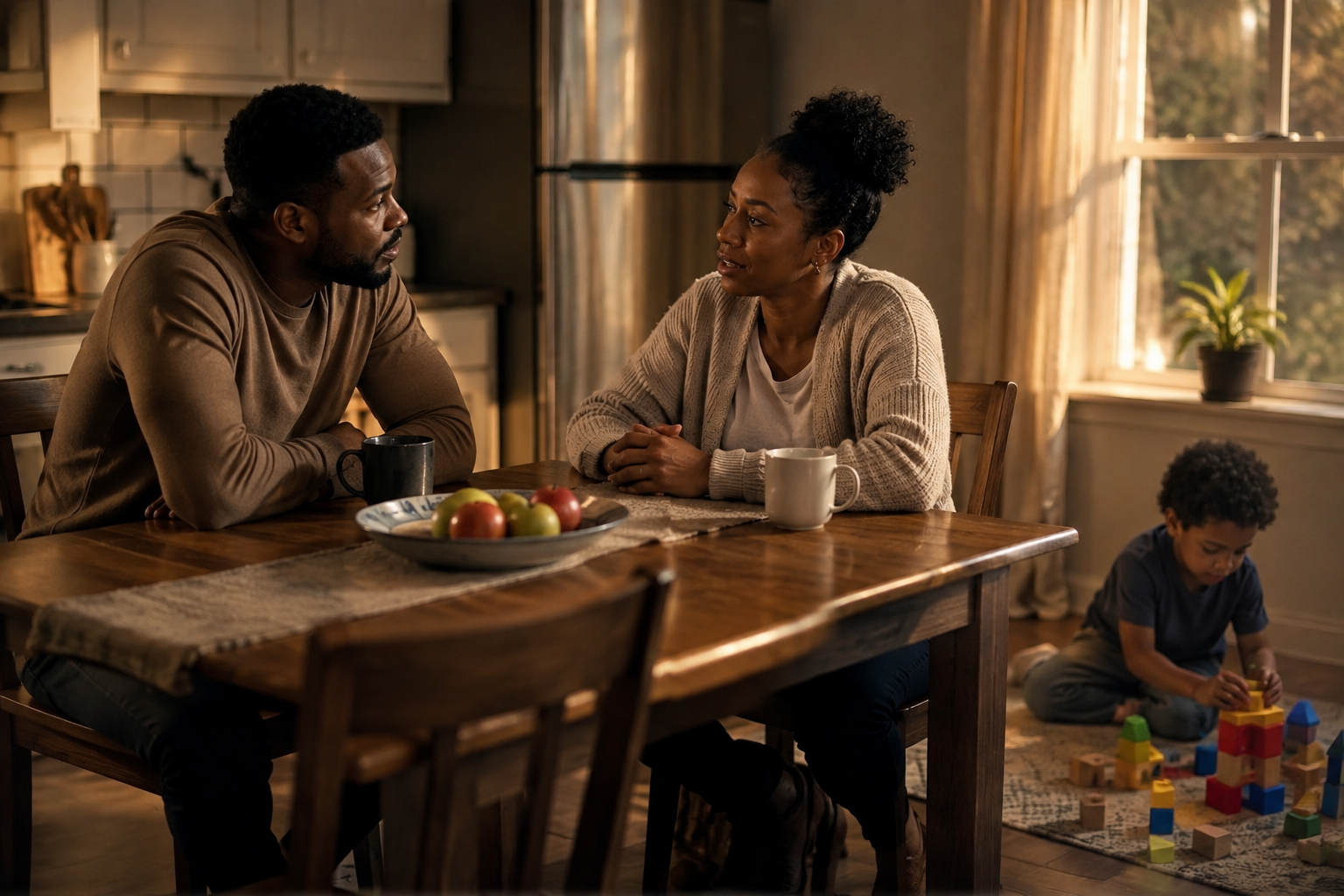
Parenting disagreements in marriage catch most couples off guard. Before children, disagreements were about schedules or budgets. After children, they become about values. One parent wants structure. The other wants flexibility. One believes in consequences. The other believes in conversation. Neither parent is wrong. They are simply different people raising a child together, and that difference will surface in nearly every decision you make.
This is one of the most common sources of tension in marriage, yet it rarely gets addressed directly. Couples talk about finances. They talk about intimacy. They talk about in-laws. Parenting disagreements often go unspoken until they explode over something small, like bedtime or screen time. Understanding why these disagreements happen, and how to handle them without damaging your marriage, can change the entire atmosphere of your home.
Why Parenting Disagreements Feel So Personal
Parenting touches identity. When your spouse disagrees with how you handled a tantrum or a curfew, it can feel like they are questioning your character, not just your method. This is why parenting arguments escalate faster than almost any other kind of conflict.
Most people parent the way they were parented, or they parent as a direct reaction against it. If you grew up with strict rules, you may lean toward strictness or toward permissiveness, depending on how those rules felt to you. Your spouse carries a different history. When your instincts clash, it rarely means one of you is right and the other is wrong. It usually means two different childhoods are sitting at the same dinner table.
Recognizing this shifts the conversation. Instead of asking, “Why won’t you see it my way?” you can ask, “What is shaping the way you see this?” That question alone can soften an argument before it starts.

The Real Issue Is Rarely the Rule Itself
Couples often argue about the specific rule, screen time limits, chores, discipline, when the real issue is something deeper. One parent may feel unsupported. The other may feel controlled. One may fear their child will struggle without boundaries. The other may fear the child will grow up feeling unloved.
Once you name the fear underneath the disagreement, the argument changes shape. You stop defending a position and start understanding a person.
This does not mean every disagreement resolves instantly. It means you are finally talking about the right thing.
Protecting Your Marriage While You Sort It Out
Children are perceptive. They notice tension, and they can sense division even when parents think they are hiding it well. However, the goal is not to pretend you always agree. The goal is to disagree in a way that keeps your marriage safe.
A few practices help protect the relationship during these moments.
- Talk privately, not in front of your child. A united front does not mean silencing disagreement. It means having that disagreement away from small ears, then returning to your child with a shared decision.
- Ask questions before making statements. “Help me understand why you handled it that way” opens a conversation. “You always undermine me” closes one.
- Remember you are on the same team. Your spouse is not your opponent. Your spouse is the other person who loves this child and is trying their best, even when their best looks different from yours.
- Give yourselves time. Not every disagreement needs resolving in the heat of the moment. Stepping away and returning later, once emotions have settled, often leads to a far more productive conversation.
When Disagreements Repeat
If the same argument keeps resurfacing, it may point to an unresolved pattern rather than a single issue. This is common, and it does not mean your marriage is in trouble. It means there is an opportunity to slow down and talk more intentionally, perhaps outside of a stressful parenting moment altogether.
Some couples find it helpful to set aside quiet time each week to talk through parenting approaches before conflict arises, rather than only in reaction to it. Others find that guided prayer or reflection helps reframe the conversation around shared values instead of competing preferences.
A resource like the Guided Marriage Prayer Journal for Couples can offer structured prompts for exactly these conversations, creating space to process disagreements together rather than letting them build silently.
As an Amazon Associate, we earn from qualifying purchases. This post contains affiliate links, which means we may receive a small commission at no extra cost to you.

A Different Way to Measure Success
Success in parenting is not measured by whether you and your spouse always agree. It is measured by whether your child grows up in a home where disagreement is handled with respect. Children learn far more from watching how their parents resolve conflict than from any single parenting rule enforced consistently.
When children see their parents disagree calmly, listen to each other, and reach a decision together, they learn something valuable about marriage itself. They learn that love does not require constant agreement. It requires respect, patience, and a willingness to keep choosing each other even when you see things differently.
Moving Forward Together
Parenting disagreements do not have to threaten your marriage. They can actually strengthen it, if you let them lead to understanding instead of division. The next time you and your spouse see eye to eye on nothing regarding bedtime, homework, or screen time, pause before reacting. Ask what is really being protected underneath the disagreement. More often than not, you will find two people who love the same child, just from two different directions.
Your marriage was never meant to run on constant agreement. It was meant to run on partnership, and partnership always includes moments of disagreement handled well.
For more encouragement on faith, family, and the everyday moments that shape a marriage, visit Walking with the Lord. For more on building a strong, resilient marriage, explore additional resources at Blissfully Wedded.
