
This post contains affiliate links. As an Amazon Associate, I earn from qualifying purchases at no extra cost to you.
Couples who don’t fight sometimes wear that fact like a badge of honor. And on the surface, it sounds lovely. No slammed doors, no silent dinners, no tense car rides home from your in-laws.
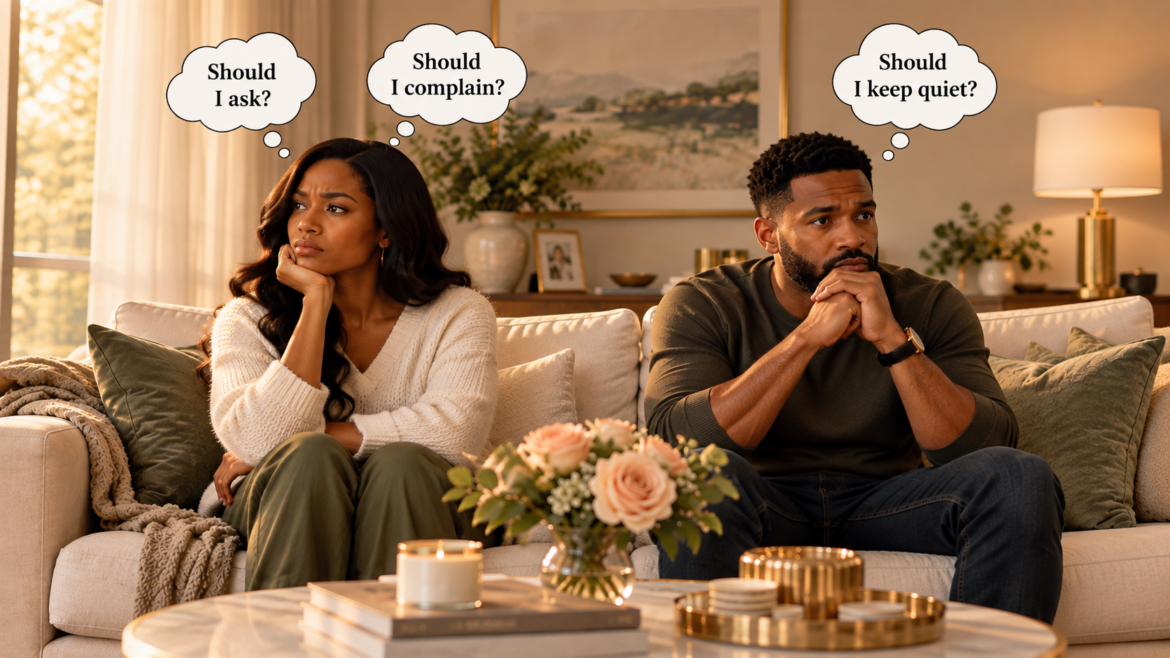
That said, calm is not the same as close. In fact, some of the most disconnected couples are the quietest ones. They are not at peace. They have simply stopped saying the hard things out loud.
So, if you and your spouse are among the couples who don’t fight, this is not a lecture. Instead, think of it as a gentle check-up. Let’s look at what your calm might be hiding and how to tell the difference.
Why Couples Who Don’t Fight Aren’t Always Thriving
Every couple has disagreements. After all, you are two different people with different families, habits, and opinions on how to load the dishwasher. As a result, a total lack of conflict usually means one of two things.
First, you might be truly aligned and handling small differences well. That’s wonderful. Second, one or both of you might be swallowing concerns to avoid rocking the boat. Unfortunately, the second is far more common than people admit.
Research from the Gottman Institute shows that most relationship conflicts are perpetual. In other words, they never fully go away. Happy couples don’t erase those issues. Instead, they learn to talk about them with kindness and even humor.
Calm is not the same as close. The real question is whether you both feel safe enough to be fully known.

The Hidden Cost of Keeping the Peace
Picture this. Your spouse makes weekend plans without asking you, again. You feel a flash of frustration. However, you decide it isn’t worth an argument, so you smile and grab your shoes.
One moment like that is no big deal. But when it happens week after week, those unspoken feelings pile up. Eventually, resentment starts talking for you through sarcasm, distance, or a sudden blowup over something tiny.
Avoidance also robs your spouse of the chance to know you. Simply put, they can’t meet a need they never hear about. Over time, you can end up living like polite roommates who share a calendar but not a heart.
There’s a sneaky side effect, too. When you hold back the hard stuff, you often hold back the joyful stuff as well. Because emotions travel together, muting one tends to quiet them all.
Signs Your Calm Might Really Be Avoidance
Not every peaceful marriage is in trouble. Still, it helps to be honest with yourself. Here are a few signs that couples who don’t fight may be avoiding rather than agreeing.
- You rehearse conversations in your head but never actually have them.
- One of you always gives in, and it’s usually the same person.
- You vent to friends about things your spouse has never heard.
- Physical or emotional closeness has quietly faded.
- You feel more relief than connection when a day ends without tension.
If a few of these sound familiar, don’t panic. Treat it as useful information instead. Noticing the pattern is the first step toward changing it.

What Healthy Conflict Actually Looks Like
Healthy conflict is not yelling, name-calling, or keeping score. Rather, it’s two people on the same team, facing a problem together. The tone stays respectful, even when the topic is uncomfortable.
It might sound like this: “When plans get made without me, I feel left out. Can we check with each other first?” Notice there’s no blame, just a feeling and a request. That’s also much easier to hear than “You never think about me.”
For couples of faith, it helps to remember that keeping the peace and making peace are different. Scripture encourages us to speak the truth in love, not to stay silent for comfort’s sake. Honest words, offered gently, can actually draw you closer.
In fact, many couples who don’t fight are surprised to learn that disagreement can be a form of intimacy. It quietly says, “I trust you enough to be honest.” That kind of trust is worth protecting.
If you want a roadmap, Fight Right by John and Julie Gottman is a practical guide to arguing in ways that build trust. Similarly, Hold Me Tight by Dr. Sue Johnson helps you understand the emotional needs underneath your disagreements.
How Couples Who Don’t Fight Can Start Talking Again
The good news is that you don’t need to create drama. You just need a safe way to bring hidden things into the light. Here are a few ideas to try this week.
- Hold a weekly check-in. Set aside 20 minutes and ask, “Is anything on your mind that we haven’t talked about?” Keep it calm and phone-free.
- Start with small stuff. Practice sharing minor preferences, like where to eat. As a result, bigger conversations will feel less scary.
- Use a soft start. Begin with “I feel” instead of “You always.” This way, your spouse is less likely to feel attacked.
- Try a guided tool. Structured prompts take the pressure off. For example, Eight Dates by the Gottmans walks you through eight conversations, including one on conflict. For a faith-based option, The Love Dare offers daily challenges that build honest kindness.
Be patient with yourselves as you practice. Your first few honest talks may feel clunky, and that’s normal. Over time, you’ll both learn that your relationship can handle the truth.

The Goal Is Connection, Not Silence
Couples who don’t fight aren’t automatically doing it wrong. However, the real question isn’t how often you argue. It’s whether you both feel safe enough to share what’s really on your heart.
So, this week, try one honest, gentle conversation. It may feel awkward at first. Even so, a little healthy friction is often the doorway to a deeper and more lasting kind of peace. Remember, you’re not trying to argue more. You’re simply making room for both of you to be heard.
Read more marriage encouragement and wedding planning inspiration at blissfullywedded.com, and for faith-based reflections, visit walkingwiththelord.net.