
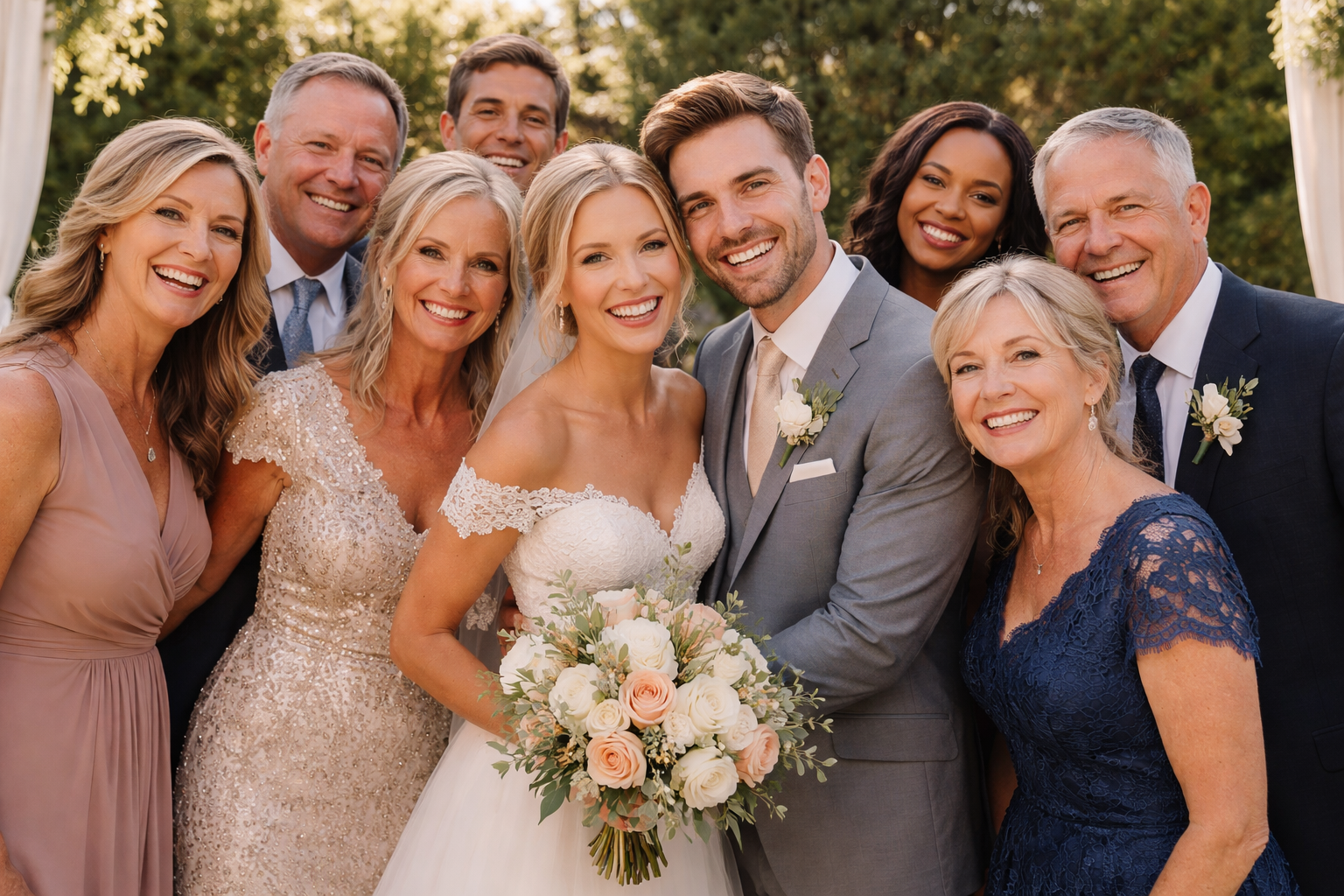
Handling tricky family situations on your wedding day:
Listen to This Post
Your wedding day is meant to be a joyful celebration of love, commitment, and faith. Yet for many couples, it can also bring together complicated family dynamics that have been quietly simmering for years. Divorced parents, strained sibling relationships, cultural expectations, or well-meaning relatives with strong opinions can all create emotional tension. Learning how to gracefully handle tricky family situations on your wedding day allows you to protect your peace while honoring the people you love.
This guide will walk you through practical, thoughtful strategies to navigate sensitive family matters with wisdom, grace, and confidence, so your wedding day remains centered on what truly matters.
Acknowledge That Family Dynamics Matter
Family relationships do not disappear simply because it is your wedding day. Old wounds, unresolved conflicts, or long-standing misunderstandings may surface when emotions are high and expectations are strong. Acknowledging this reality ahead of time is the first step in handling tricky family situations on your wedding day.
Instead of hoping potential issues will resolve themselves, take time during the planning process to reflect on where tensions may exist. Awareness allows you to plan proactively rather than reacting emotionally on the day itself.
Set Clear Boundaries Early
Boundaries are not unloving. They are a form of clarity that helps everyone understand their role and expectations. Setting boundaries early is essential when handling tricky family situations on your wedding day.
Decide together as a couple what decisions belong solely to you. This may include guest list limits, seating arrangements, ceremony traditions, or how cultural elements are incorporated. Once you are aligned, communicate decisions calmly and respectfully.
Helpful phrases:
- We’ve prayed about this and feel confident in our decision.
- This is what works best for us as a couple.
Lean on a Trusted Point Person
One of the most effective strategies for handling tricky family situations on your wedding day is delegating. Choose a trusted friend, sibling, planner, or coordinator to act as your buffer. This person can redirect conversations, handle complaints, or manage unexpected emotional moments so you are not pulled away from your celebration.
Amazon picks to support your day-of support team:
Create a Thoughtful Seating Plan
Seating arrangements often carry emotional weight, especially when families are blended or relationships are strained. Thoughtful seating is a subtle but powerful way of handling tricky family situations on your wedding day.
Consider these tips:
- Avoid placing estranged family members at the same table
- Seat supportive, calming personalities near sensitive relatives
- Use a sweetheart table to reduce pressure
Amazon picks for seating organization:
Prepare for Emotional Moments
Weddings are emotional by nature. Tears, nostalgia, and heightened feelings are normal, especially for parents and close relatives. While you cannot control emotions, you can prepare for them.
Have tissues readily available, designate a quiet space for private conversations, and mentally rehearse how you will respond if emotions run high. Responding with calm reassurance rather than defensiveness can diffuse many situations.
Amazon picks for staying grounded:
Stay United as a Couple
Your greatest strength when handling tricky family situations on your wedding day is unity. Presenting a united front communicates security and clarity to everyone involved. If one partner feels overwhelmed, the other can step in with reassurance.
Before the wedding, discuss potential scenarios and agree on responses. Decide who will speak to which family members if concerns arise. Unity minimizes confusion and reduces the likelihood of being pulled in different directions.
Let Go of the Need to Please Everyone
One of the hardest lessons in wedding planning is accepting that not everyone will be fully satisfied. Trying to please everyone often leads to stress, resentment, and exhaustion.
Handling tricky family situations on your wedding day requires emotional maturity and the willingness to release unrealistic expectations. Your wedding is not the moment to resolve years of family conflict. It is a day to celebrate your marriage.
Keep the Focus on the Meaning of the Day
When tensions arise, gently redirect your heart back to the purpose of your wedding. This day represents covenant, commitment, and love. Keeping meaningful symbols close can help ground you.
Many couples incorporate:
- Scripture readings
- Prayer moments
- Keepsake vow books
- Personalized unity ceremony items
 Use Professional Support When Needed
If family dynamics feel particularly complex, professional support can be invaluable. Wedding planners, coordinators, and even pre-marital counselors can offer neutral guidance. Investing in professional help is not a weakness; it is a wise step toward peace.
Amazon picks for planning clarity:
Extend Grace Without Sacrificing Peace
Grace does not mean allowing chaos. It means responding with kindness while maintaining healthy limits. Handling tricky family situations on your wedding day often requires compassion paired with firmness.
Listen where appropriate, acknowledge feelings without agreeing to unreasonable demands, and choose peace whenever possible. Your calm presence can influence the atmosphere more than you realize.

